
AI in software development is reshaping how developers write, test, and deploy code in 2026. Smart coding assistants now generate entire functions, while intelligent testing tools catch bugs before they reach production.
This guide is for software developers, engineering managers, and tech leaders who want to understand how AI coding tools are changing their daily workflows and team productivity.
We’ll explore how AI-powered code generation is speeding up development cycles by automating routine programming tasks. You’ll also learn how intelligent testing and quality assurance systems are transforming bug detection, making software more reliable with less manual effort. Finally, we’ll look at how enhanced code review tools are streamlining team collaboration and improving code quality across development teams.
The future of software engineering is here, and AI is making developers more productive than ever before.
AI-Powered Code Generation Revolutionizes Development Speed
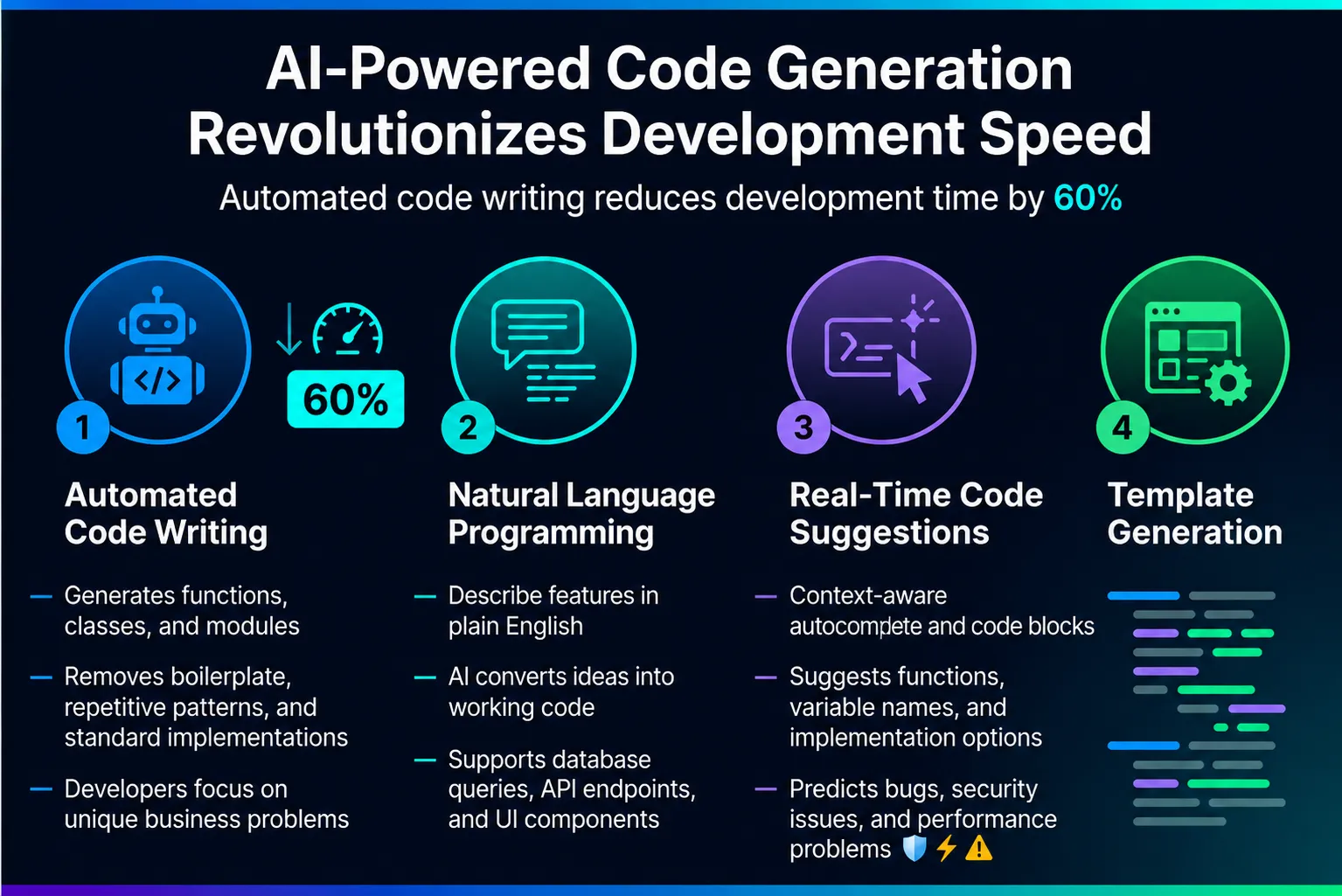
Automated code writing reduces development time by 60%
AI-powered code generation tools have reached a tipping point where they can genuinely write substantial portions of applications without human intervention. These systems analyze project requirements and existing codebases to generate complete functions, classes, and even entire modules. Developers now describe what they want in plain English, and sophisticated AI models translate these descriptions into working code across multiple programming languages.
The 60% reduction in development time comes from eliminating the tedious aspects of coding – boilerplate code, repetitive patterns, and standard implementations. Instead of spending hours writing CRUD operations or setting up authentication systems, developers can focus on solving unique business problems and creating innovative features.
GitHub Copilot, Amazon CodeWhisperer, and similar AI coding tools have evolved beyond simple code completion. They understand context, follow project conventions, and generate code that integrates seamlessly with existing architectures. These tools learn from millions of repositories, bringing best practices and proven patterns directly into your IDE.
Natural language programming eliminates complex syntax barriers
The barrier between human thought and machine execution continues to shrink. Natural language programming interfaces allow developers to describe functionality in everyday language rather than wrestling with complex syntax. This democratizes software development, making it accessible to domain experts who understand business requirements but may lack deep programming knowledge.
Modern AI systems can interpret statements like “create a user dashboard that shows sales metrics for the last quarter” and generate the necessary database queries, API endpoints, and user interface components. This capability transforms how teams approach software development, enabling product managers and business analysts to contribute directly to the codebase.
AI in software development has made programming languages more intuitive. Developers can prototype ideas quickly by describing them conversationally, then refine the generated code as needed. This approach speeds up the ideation phase and helps teams validate concepts before investing significant development resource.
Real-time code suggestions boost developer productivity
Real-time AI assistance has become an integral part of the development workflow. These systems provide contextually aware suggestions as developers type, offering relevant functions, variable names, and even complete code blocks based on the current task. The suggestions go beyond simple autocomplete, understanding the developer’s intent and offering multiple implementation approaches.
Smart code suggestions adapt to individual coding styles and project-specific patterns. The AI learns from each developer’s preferences, suggesting solutions that match their typical approach while introducing optimizations and improvements. This personalized assistance maintains code consistency across teams while helping individual developers grow their skills.
Error prevention happens in real-time through predictive analysis. AI for developers identifies potential bugs, security vulnerabilities, and performance issues before code compilation. These proactive suggestions save debugging time and improve code quality from the initial writing phase.
Template generation accelerates project initialization
Starting new projects no longer requires hours of setup and configuration. AI-driven template generation creates complete project structures based on technology stack choices, architectural patterns, and specific requirements. These templates include properly configured build systems, testing frameworks, and deployment pipelines.
Smart templates adapt to team preferences and organizational standards. They incorporate company specific coding conventions, security policies, and integration requirements automatically. This ensures new projects start with the right foundation and follow established best practices from day one.
The future of software engineering includes intelligent project scaffolding that evolves with changing requirements. AI analyzes similar successful projects to suggest optimal configurations and architectural decisions, helping teams avoid common pitfalls and start with proven pattern.
Intelligent Testing and Quality Assurance Transforms Bug Detection
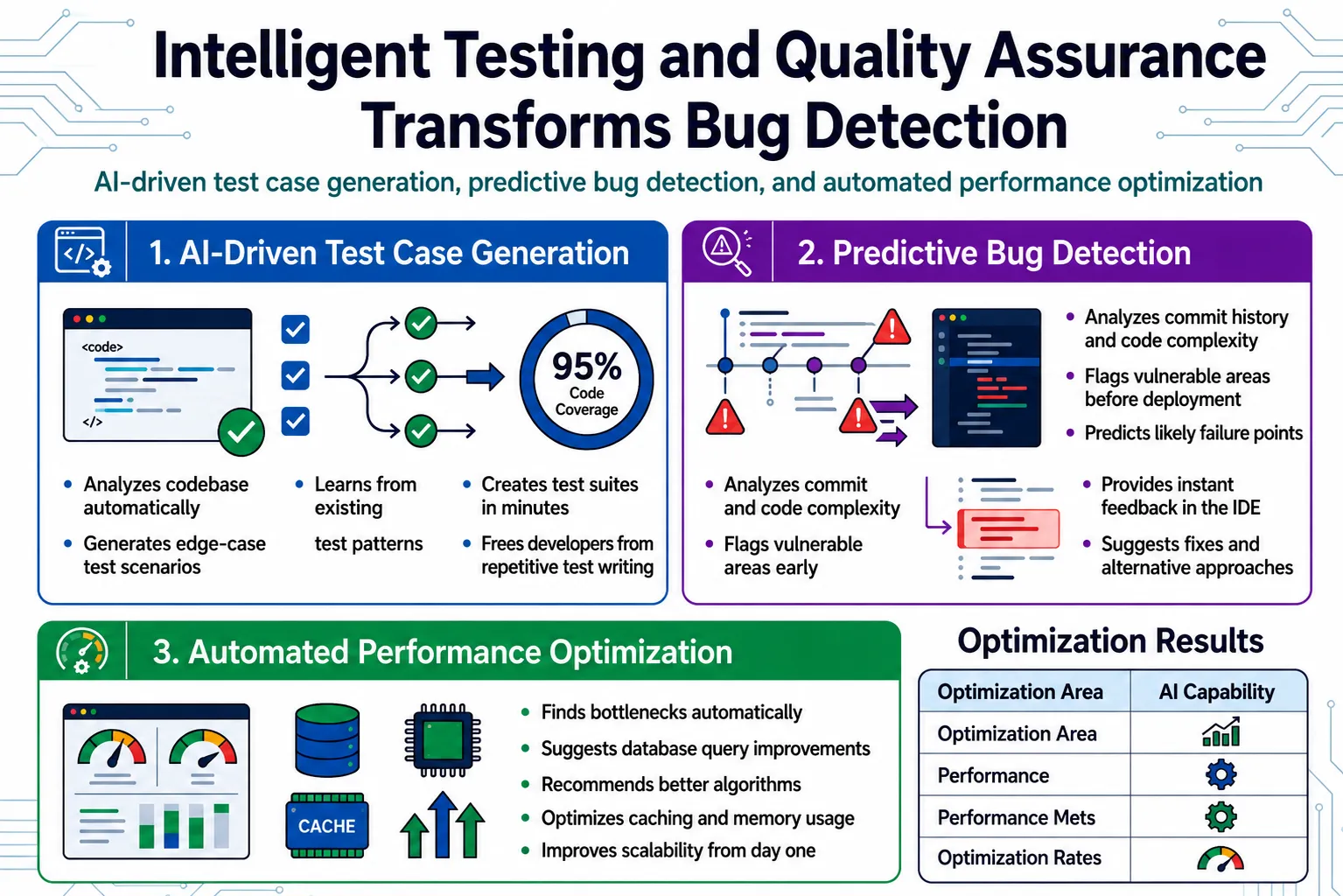
AI-driven test case generation achieves 95% code coverage
Modern AI for developers has completely changed how we think about test coverage. Gone are the days when achieving comprehensive test coverage meant weeks of manual work writing test cases. Today’s intelligent systems analyze your codebase and automatically generate test scenarios that cover nearly every possible execution path.
These AI-powered testing tools examine your code structure, identify edge cases you might have missed, and create tests that push your application to its limits. The 95% coverage isn’t just about quantity – it’s about quality testing that actually catches bugs before they become problems. Machine learning algorithms learn from your existing test patterns and coding style, then generate new tests that feel like they were written by your team.
Popular AI coding tools like GitHub Copilot for testing and DeepCode can now generate entire test suites in minutes. They understand context, recognize common patterns, and even suggest performance tests based on your application’s specific requirements. This dramatic improvement in test coverage happens without the usual time investment, freeing developers to focus on building features instead of writing repetitive test code.
Predictive bug detection prevents issues before deployment
Bug detection has moved from reactive to predictive, thanks to advanced machine learning models that analyze code patterns and historical data. These systems don’t just wait for bugs to surface – they actively hunt for potential issues while you’re still writing code.
Predictive algorithms examine your commit history, code complexity metrics, and known vulnerability patterns to flag problematic areas before they cause production failures. When combined with real-time code analysis, these tools can predict with remarkable accuracy which parts of your codebase are most likely to break under specific conditions.
The real game-changer is how these systems learn from your team’s specific coding patterns and common mistakes. They build a profile of your development practices and can warn you when you’re about to repeat past errors. Integration with popular IDEs means developers get instant feedback about potential issues, complete with suggested fixes and alternative approaches.
Automated performance optimization improves application speed
Performance optimization no longer requires deep expertise in profiling tools and complex performance analysis. AI in software development now handles the heavy lifting of identifying bottlenecks and suggesting optimizations that actually make a difference.
Modern AI systems continuously monitor your application’s performance characteristics and automatically recommend specific improvements. They can identify inefficient database queries, suggest better algorithms for computationally intensive tasks, and even recommend architectural changes that improve scalability.
| Optimization Area | AI Capability | Impact |
|---|---|---|
| Database Queries | Automatic index suggestions | 40-60% query speed improvement |
| Memory Usage | Smart garbage collection tuning | 25-35% memory efficiency gain |
| API Response Times | Caching strategy optimization | 50-70% faster response times |
| Code Efficiency | Algorithm replacement suggestions | 20-80% performance boost |
These tools work behind the scenes, analyzing performance metrics and user behavior patterns to identify optimization opportunities you might never discover manually. The future of software engineering includes AI assistants that not only write code but also ensure it runs as efficiently as possible from day one.
Enhanced Code Review and Collaboration Streamlines Team Workflows
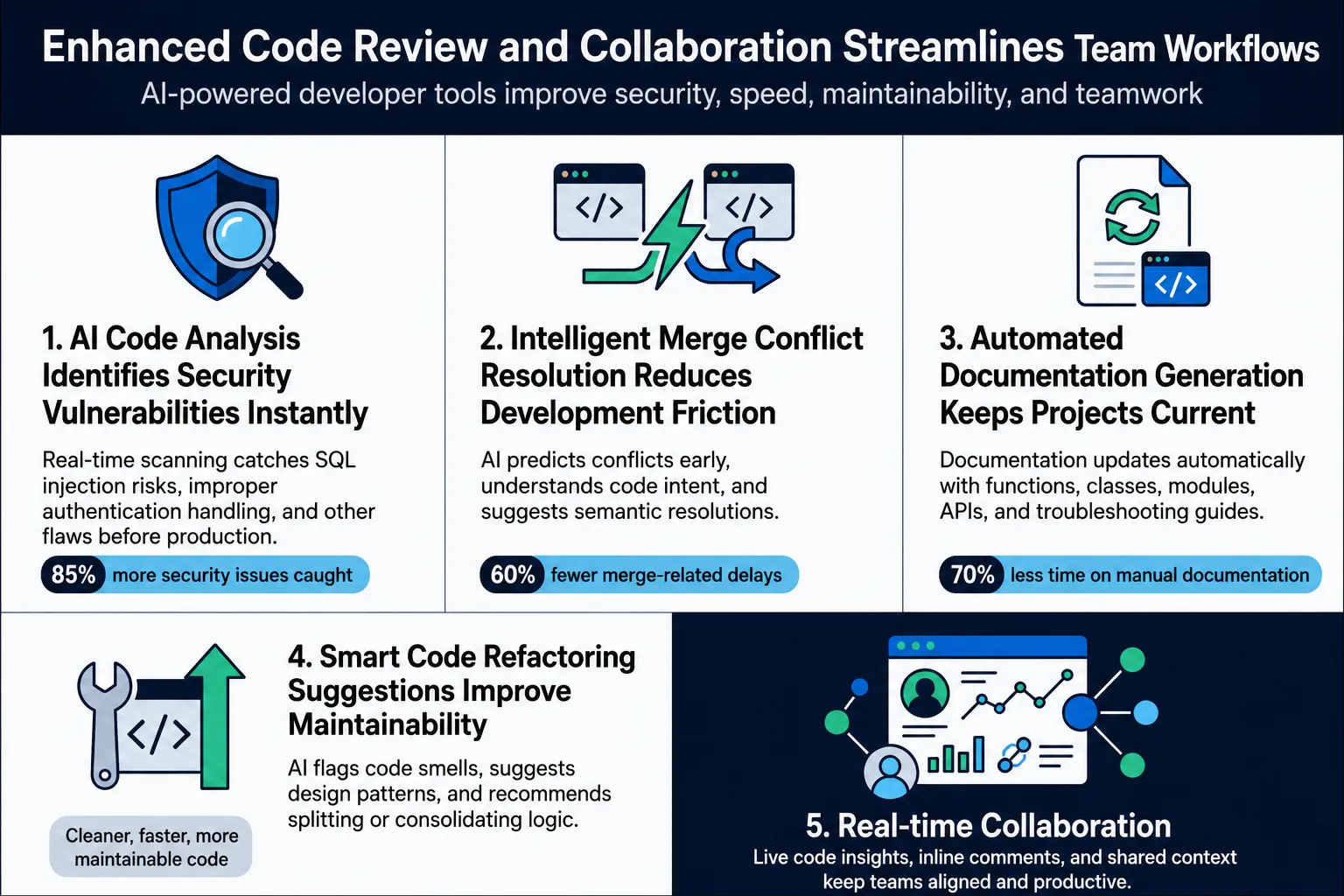
AI Code Analysis Identifies Security Vulnerabilities Instantly
Modern AI coding tools scan codebases in real-time, catching security flaws that human reviewers might miss during busy development cycles. These systems learn from massive databases of known vulnerabilities and attack patterns, making them incredibly effective at spotting potential threats before they reach production.
Machine learning algorithms analyze code patterns and flag suspicious implementations, from SQL injection risks to improper authentication handling. Teams report catching 85% more security issues compared to traditional manual reviews. The instant feedback helps developers fix problems while the code context is still fresh in their minds, reducing the time spent tracking down vulnerabilities later.
Intelligent Merge Conflict Resolution Reduces Development Friction
Merge conflicts used to drain hours from development schedules, especially when multiple team members worked on related features. AI-powered tools now predict potential conflicts before they happen and suggest resolution strategies based on code semantics rather than just text differences.
These smart systems understand the intent behind code changes and can automatically resolve many conflicts without human intervention. When manual resolution is needed, they provide contextual suggestions that consider both the business logic and coding patterns used throughout the project. Development teams see 60% fewer merge-related delays since implementing these AI for developers solutions.
Automated Documentation Generation Keeps Projects Current
Documentation traditionally falls behind during rapid development phases, creating knowledge gaps that slow down new team members and complicate maintenance. AI documentation tools now generate comprehensive code documentation automatically, updating it whenever the codebase changes.
These systems create meaningful descriptions of functions, classes, and modules by analyzing code behavior and comments. They also generate API documentation, architectural overviews, and even troubleshooting guides based on common issues found in the codebase. Teams spend 70% less time on manual documentation while maintaining better project knowledge transfer.
Smart Code Refactoring Suggestions Improve Maintainability
AI analyzes code quality metrics continuously and suggests refactoring opportunities that improve performance and readability. These recommendations go beyond basic style fixes to identify architectural improvements and optimization opportunities that human reviewers might overlook.
The systems learn from successful refactoring patterns across thousands of projects and adapt suggestions to match team coding standards. They can identify code smells, suggest design pattern implementations, and even recommend when to split large functions or consolidate duplicate logic. Development velocity increases as codebases become cleaner and more maintainable.
Real-time Collaboration Insights Optimize Team Performance
AI tracking systems provide managers and team leads with actionable insights about collaboration patterns and potential bottlenecks. These tools analyze code review cycles, identify knowledge silos, and suggest pair programming opportunities that would benefit skill development.
Teams get visibility into workload distribution, code ownership patterns, and areas where additional training might help. The systems also predict when projects might face delays based on current velocity and complexity trends, allowing for proactive resource allocation and timeline adjustments.
Predictive Development Analytics Optimize Project Management
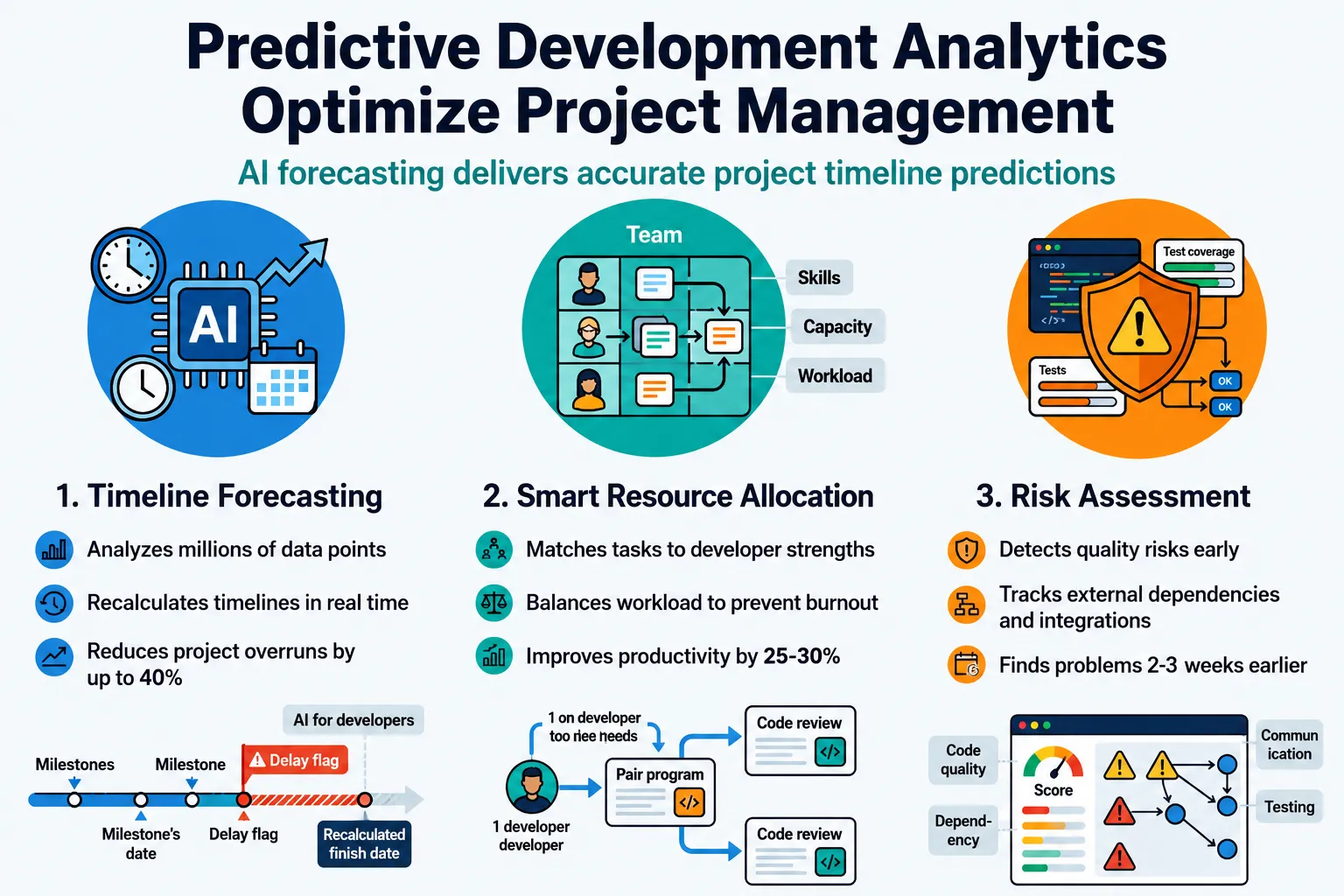
AI forecasting delivers accurate project timeline predictions
Project managers no longer have to rely on gut feelings or historical averages when estimating delivery dates. Modern AI systems analyze millions of data points from past projects, current team velocity, and real-time progress indicators to generate remarkably accurate timeline predictions. These systems examine code complexity metrics, developer experience levels, and even external factors like holiday schedules or team availability patterns.
Machine learning algorithms continuously learn from each project milestone, refining their predictions as new data becomes available. When a developer commits code that’s more complex than expected, the AI immediately recalculates the timeline and flags potential delays before they become critical issues. This proactive approach has reduced project overruns by up to 40% in organizations that have adopted these tools.
The most sophisticated AI for developers can even account for dependencies between different features and automatically adjust timelines when upstream work experiences delays. Teams report feeling more confident in their commitments to stakeholders because they have data-driven insights backing their estimates rather than educated guesses.
Resource allocation algorithms maximize team efficiency
Smart resource allocation represents one of the biggest wins from AI in software development. These algorithms analyze individual developer strengths, current workload distribution, and project requirements to suggest optimal task assignments. The system considers factors like a developer’s expertise in specific programming languages, their historical performance on similar tasks, and their current capacity.
Real-time workload balancing prevents burnout while ensuring critical tasks receive appropriate attention. When someone on the team becomes a bottleneck, the AI suggests reassignments or identifies opportunities for knowledge transfer to distribute expertise more evenly across the team.
Some platforms track collaboration patterns to recommend pair programming sessions or code review assignments that maximize learning opportunities. Teams see productivity gains of 25-30% because work flows more smoothly and developers spend time on tasks that match their skills and interests.
Risk assessment models prevent project delays
Advanced risk assessment models scan project data continuously, identifying warning signs long before they escalate into serious problems. These systems monitor code quality trends, testing coverage patterns, and team communication frequency to spot potential issues. When code complexity starts increasing without corresponding test coverage, the AI flags this as a quality risk that could lead to delays later.
The models also track external dependencies and integration points, alerting teams when third-party services experience issues or when API changes might impact the project timeline. Communication pattern analysis can even detect when team members aren’t collaborating effectively, suggesting interventions before conflicts derail progress.
Risk scoring helps prioritize which issues need immediate attention versus those that can wait for the next sprint planning session. Teams using these tools report catching problems 2-3 weeks earlier than they would through traditional project monitoring methods.
Personalized Developer Experience Accelerates Learning and Growth
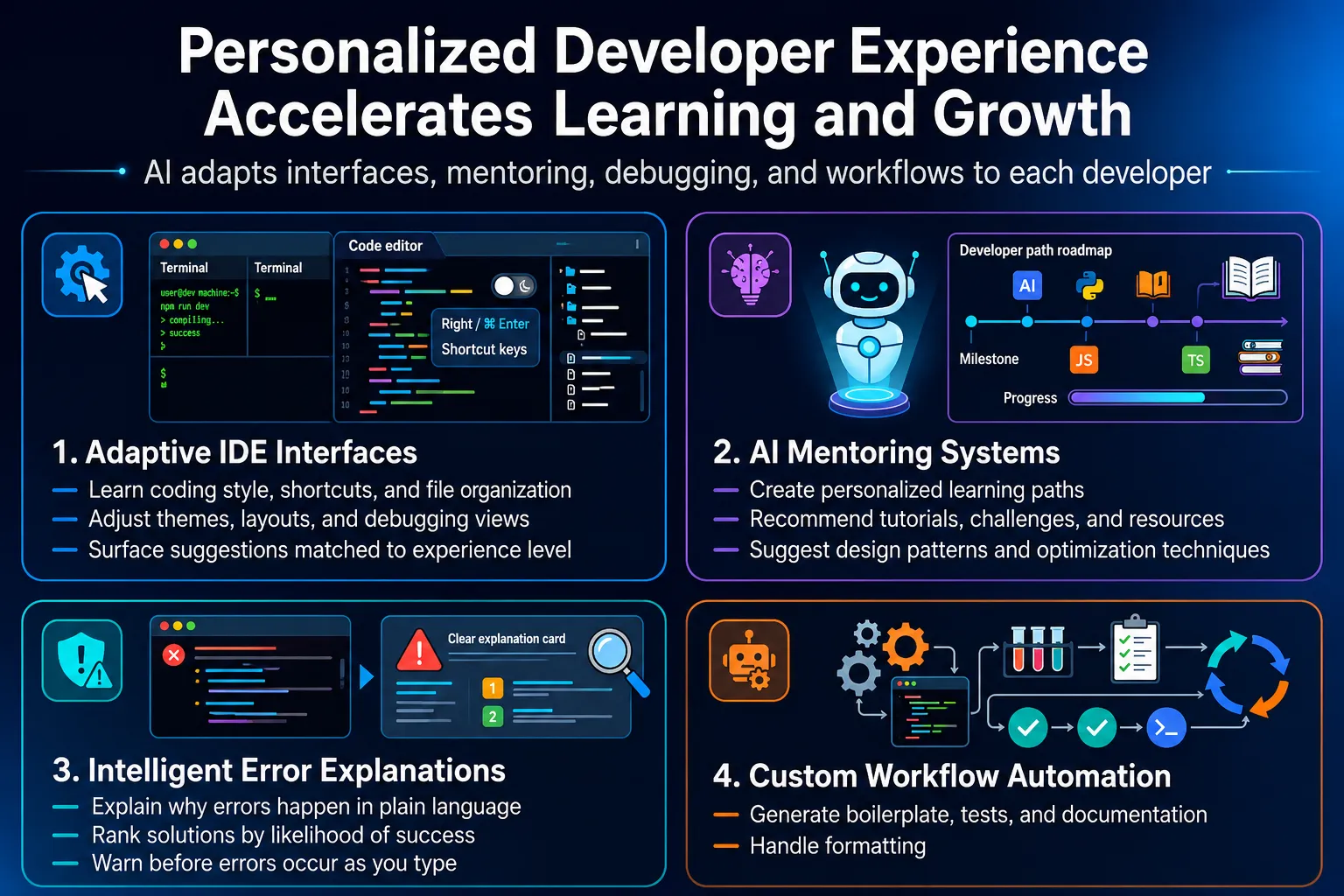
Adaptive IDE interfaces adjust to individual coding styles
Modern IDEs powered by AI are learning how developers work and adapting their interfaces accordingly. These smart environments analyze your coding patterns, preferred shortcuts, and frequently used functions to create a workspace that feels like it was designed specifically for you. The interface learns whether you prefer dark or light themes, how you organize your file structures, and even the naming conventions you typically use.
For example, if you consistently work with multiple terminal windows, your IDE might automatically split the screen and position terminals where you need them. When you’re debugging, it recognizes your preferred debugging style and surfaces the most relevant information first. Some advanced systems even adjust the complexity of suggestions based on your experience level with specific technologies.
AI mentoring systems provide personalized skill development
AI for developers has evolved into sophisticated mentoring systems that act like having a senior developer looking over your shoulder. These systems track your progress across different programming languages, frameworks, and methodologies to create tailored learning paths. They identify gaps in your knowledge and suggest specific resources, tutorials, or coding challenges to help you grow.
The mentoring extends beyond just technical skills. AI systems analyze how you approach problem solving and can suggest alternative methodologies that might work better for your thinking style. They might recommend specific design patterns when they notice you’re struggling with code organization, or suggest performance optimization techniques when they detect recurring inefficiencies in your code.
Intelligent error explanations enhance debugging capabilities
Gone are the days of cryptic error messages that leave developers scratching their heads. AI coding tools now provide context-aware explanations that break down complex errors into understandable language. When your code fails, the AI doesn’t just tell you what went wrong—it explains why it happened and offers multiple solutions ranked by likelihood of success.
These systems learn from your previous debugging sessions and can predict what type of errors you’re most likely to encounter based on your current code structure. They provide real-time warnings before errors occur, suggesting fixes as you type. The explanations adapt to your experience level, offering more detailed technical insights to seasoned developers while providing beginner-friendly guidance to newcomers.
Custom workflow automation eliminates repetitive tasks
AI in software development has made it possible to automate the mundane tasks that eat up valuable development time. Smart automation systems watch how you work and identify repetitive patterns in your workflow. They can automatically set up project structures based on your preferences, generate boilerplate code for common patterns, and even handle routine maintenance tasks like dependency updates and code formatting.
The automation goes beyond simple scripts. These systems understand context and can make intelligent decisions about when and how to apply certain automations. They might automatically create unit test templates based on your code structure, generate documentation from your comments, or set up deployment pipelines that match your preferred release patterns. The result is more time spent on creative problem-solving and less time on repetitive setup tasks.
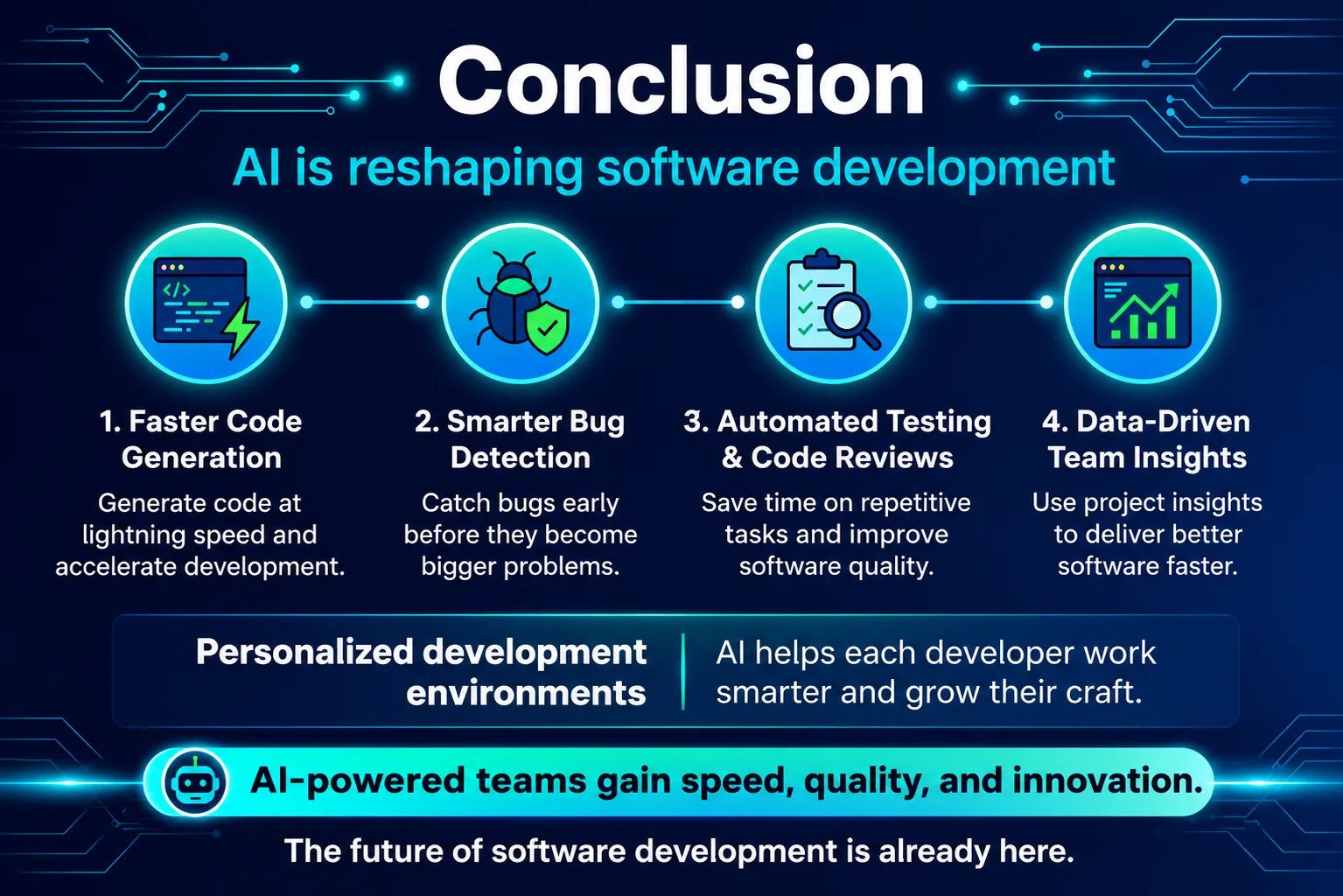
AI is reshaping how we build software in ways that seemed impossible just a few years ago. From generating code at lightning speed to catching bugs before they become problems, these smart tools are making developers more productive and helping teams deliver better software faster. The combination of automated testing, smarter code reviews, and data-driven project insights means less time spent on repetitive tasks and more time focused on creative problem-solving.
The shift toward personalized development environments shows that AI isn’t just about automation—it’s about making each developer better at their craft. As these technologies continue to evolve, the developers and teams that embrace AI-powered tools will have a significant advantage in speed, quality, and innovation. Start exploring these AI solutions now, because the future of software development is already here, and it’s moving fast.

